
THE MISSION: Re-Genre Engineer Foo Fighters “Everlong” for a String Orchestra, 6 weeks.
My reasoning for choosing was down to a few key factors that meant that it wouldn’t be as much of a stretch to re-genre this song. One of the key reasons was down to the dynamic range that the genre would require and of the song itself. It’s movement through the song of building dynamics and use of instrumentation throughout has a lot of similarities to the dynamics manipulation and use of instrumentation
Upon figuring out what I wanted the project to be, I outlined the three major stages that I would need to focus on in order to get the project done before the deadline. These were based on the three different programs I planned on using in order to have it sounding like I had envisioned: Sibelius, Logic Pro, ProTools.
Sibelius
The first stage of this project was to input the track into Sibelius, as I found this would be easier to compose with compared to Logic Pro, as I would be able to see the score and be able to input the melodies and harmonies with more ease. I used mainly 4 sources in attempting to recreate the song in the instrumentation for a String Quartet. They were:
https://musescore.com/user/3811161/scores/1059071
All of the above helped me in getting inspiration on how to best phrase the melodies within the song, as I did slow down the tempo from 158bpm down to 120bpm, thus some melodies had to change slightly to suit a slightly slower tempo. So using all of these as inspiration, as well as the actual released version of the song from iTunes (which provides some issues too in later stages, due to the compression put on them), I re-composed the song to a more classical styled piece, as can be seen below and then once I was happy with how it sounded, I exported each of the instruments separately so I could treat them in the later stages separately.
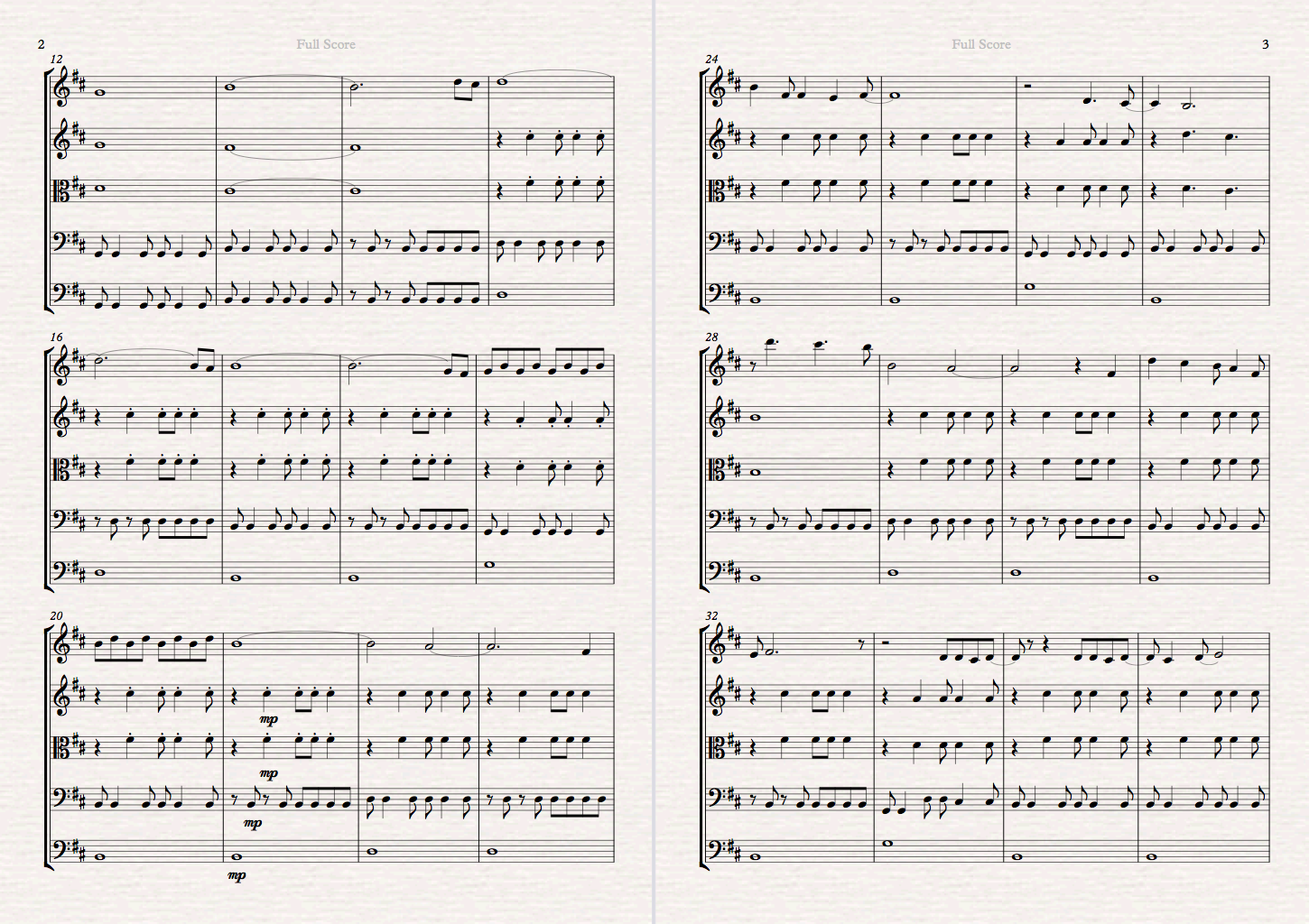

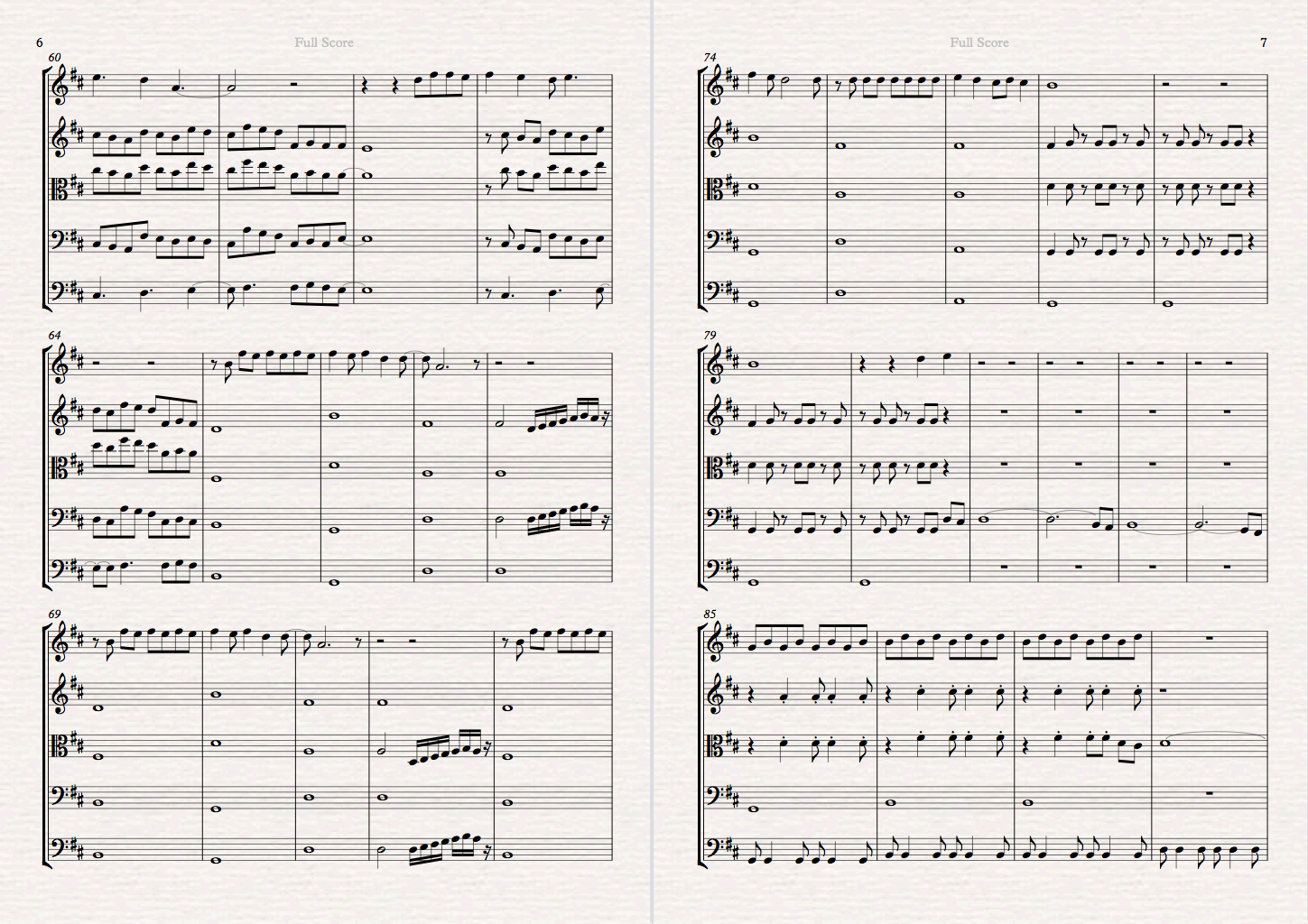
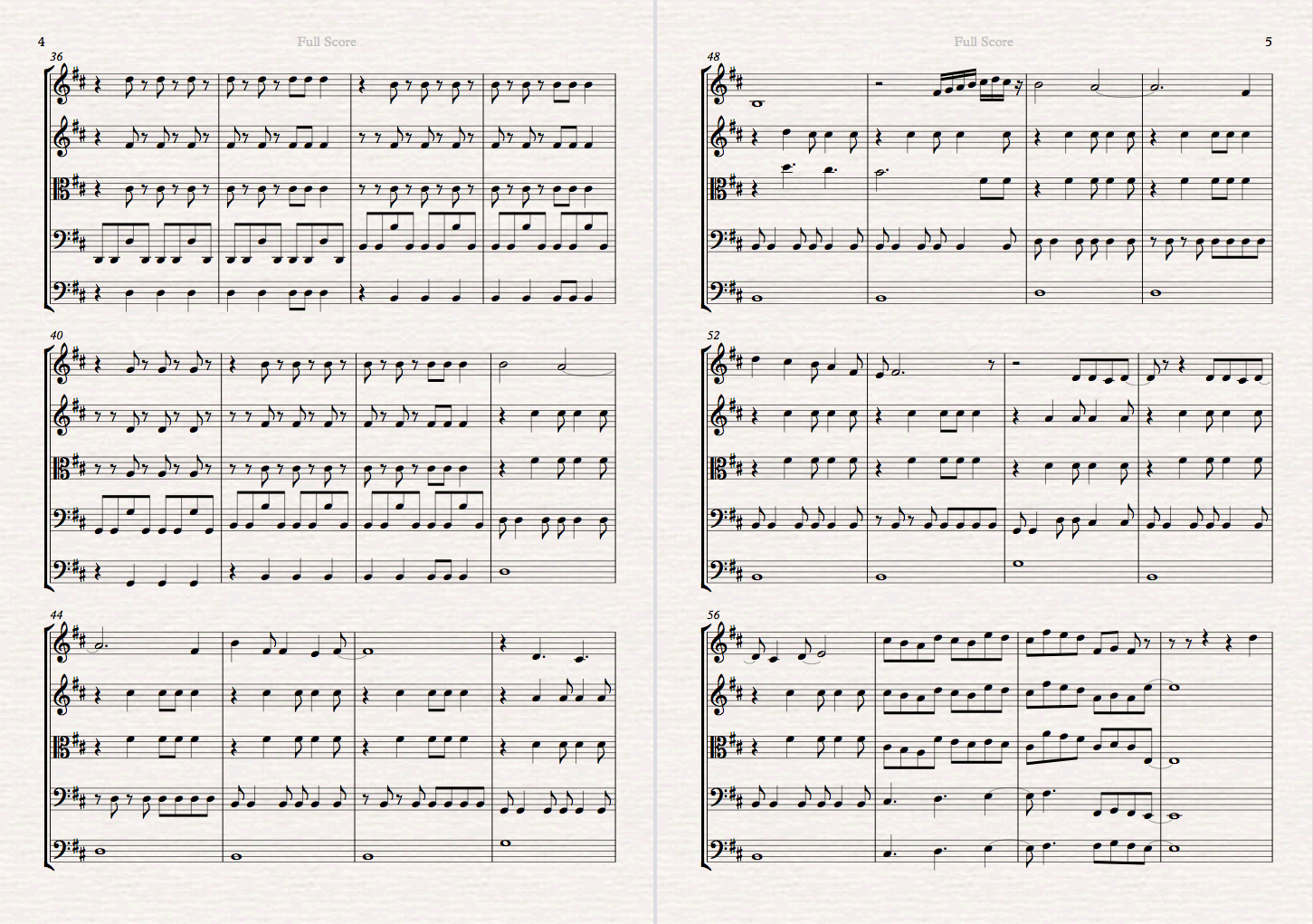
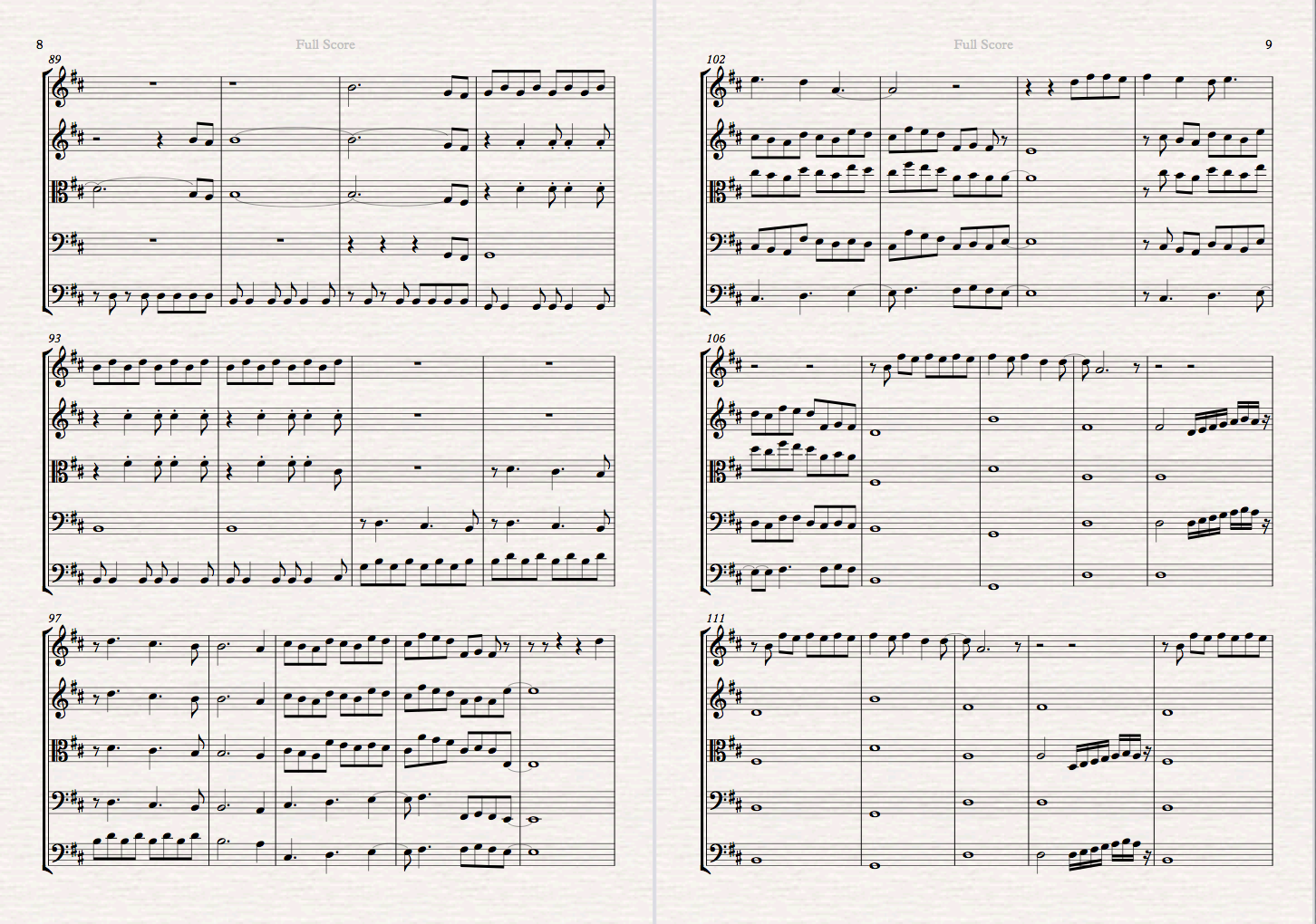
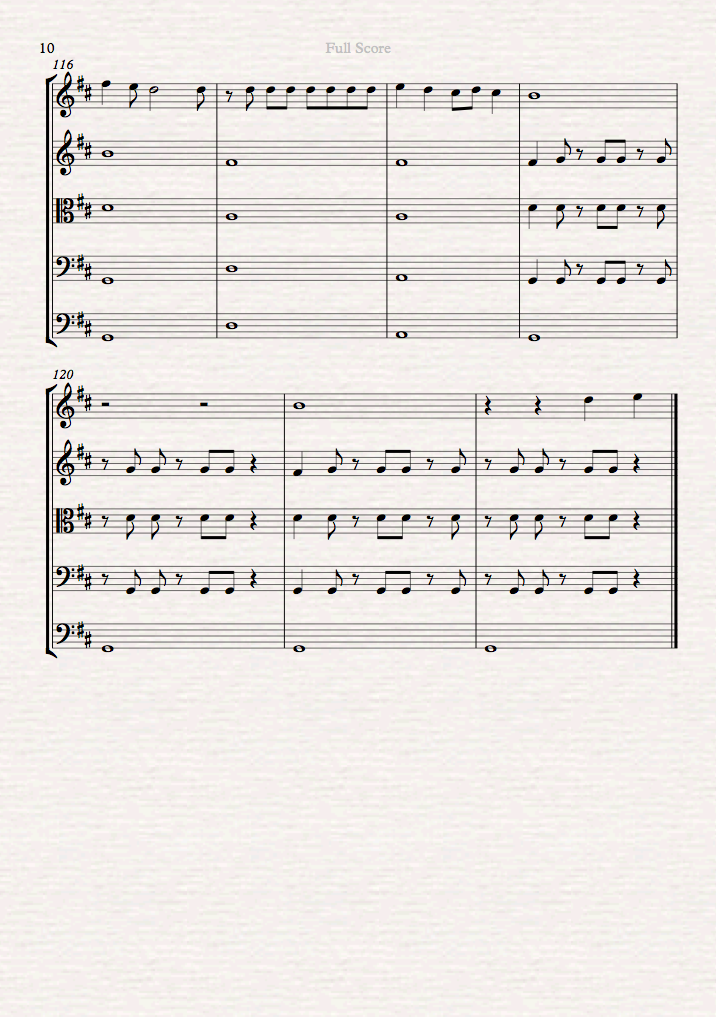
One huge problem that I faced later in the ProTools stage was that I didn’t do any ornamentation to the score or add any dynamical markings, as my initial thoughts was to leave that all for the end in ProTools, as it would make things very tricky and harder to mix in the end if i did implement these at the start, rather than do it at the start, where I should of done it in Sibelius.
Logic Pro
This stage was the quickest, as it merely acted as a quick input and then output to put into ProTools. However this took a bit longer than I expected, as the original MIDI sound packs that I had chosen to use did not have the exact sound I was looking for. So in attempting to create a tone that I wanted for the piece I ended up using 3 different tones for each instrument, duplicating each of the 5 tracks, in a way going from a string quartet to a string orchestra. In a way this also helped me, as it gave the piece some more depth and dynamic range in the end product and also allowed me to do more in terms of texture when I took the exported stems
ProTools
As I said before, at the beginning of this stage when I first tried to do the mixing of the piece when I didn’t have the dynamics or ornamentation in the piece, it provided me with a lot of issues and caused me to have to put a lot more work in the ProTools stage than needed. So before I got to the final mixing stage here. I had to go back into Sibelius in order to add in the dynamics and ornamentation that was missing- and then after this apply the same MIDI tones and treatment in logic.
When I had finally gotten the stems to where I wanted them, I started to look at the mix. An issue I faced here was that some of the dynamic markings (crescendos and “mp”, “mf”, “f” markings) did not carry over in the bounce from Logic to ProTools, thus I had to do some extra work in terms of the volume control, trying to replicate crescendos and decrescendos as best as possible with the resources at hand, as at this late stage in the project, I was running out of time to have the project completed. In trying to keep with conventions of mixing classical music, I avoided using compression plug in’s as much as possible and relied more on the use of EQ and reverb to make the tracks as authentic sounding as possible. I used a reverb bus to provide the instruments with the same reverb, however changed up the amount of reverb used on each specific track to replicate what it would be like to stand in front of a proper string orchestra in terms of where each would be standing, and also helped this with the use of panning on the tracks to further this effect.
 Kane Chong Music